
Last updated November 21, 2026
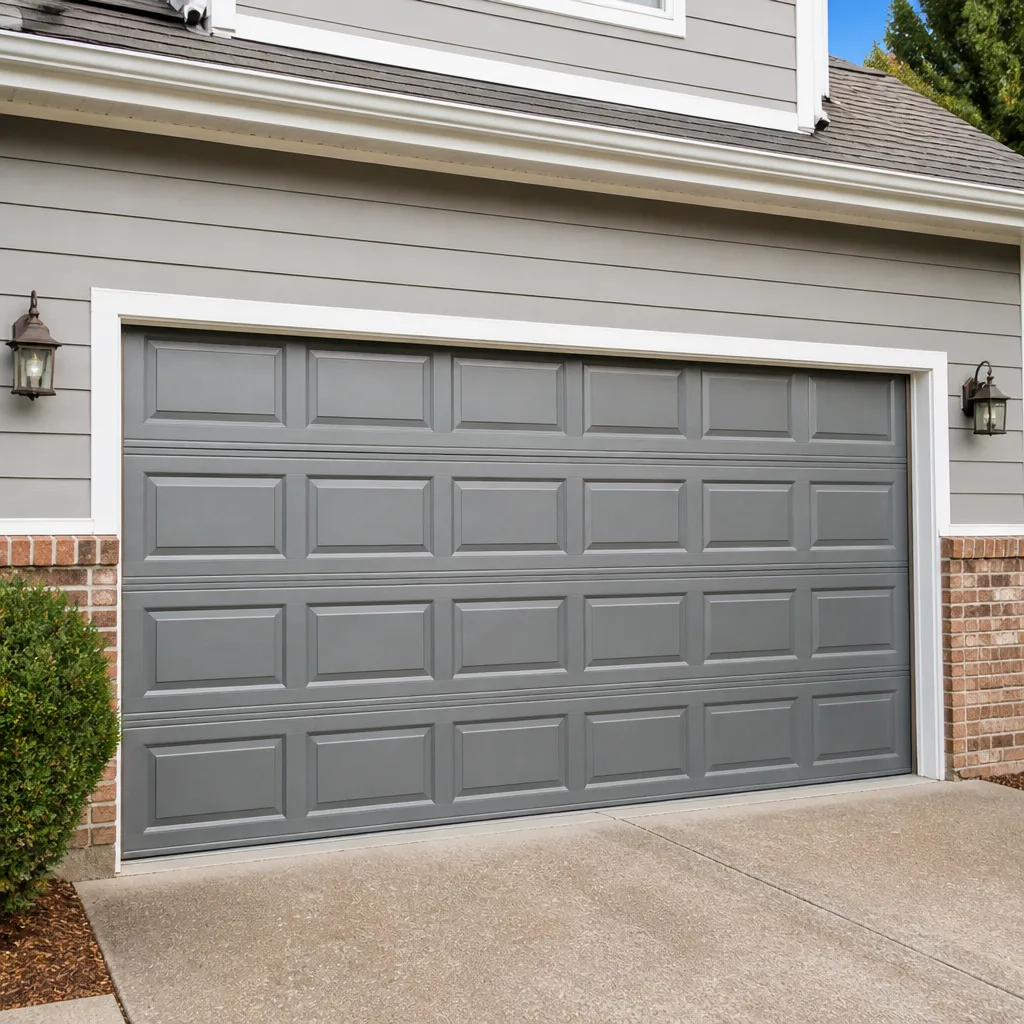 Raised-panel steel
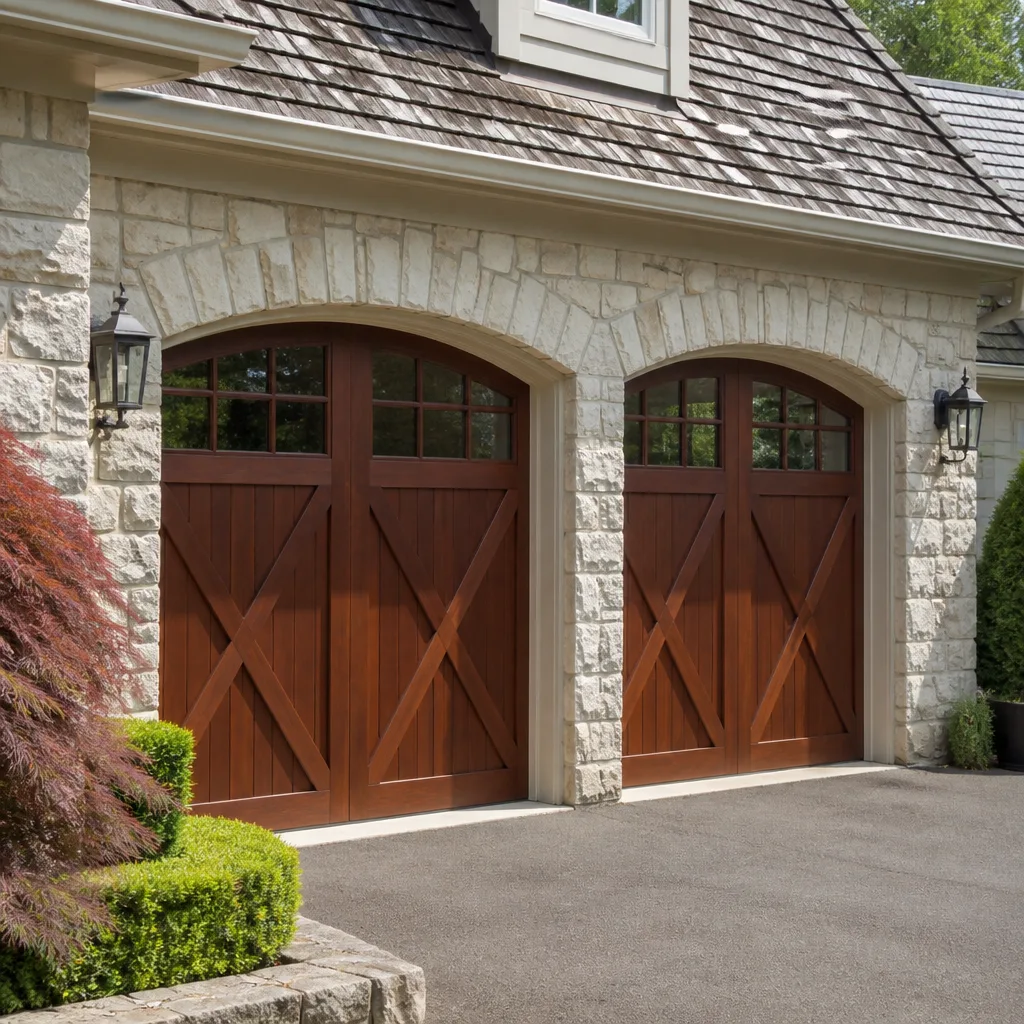 Carriage house
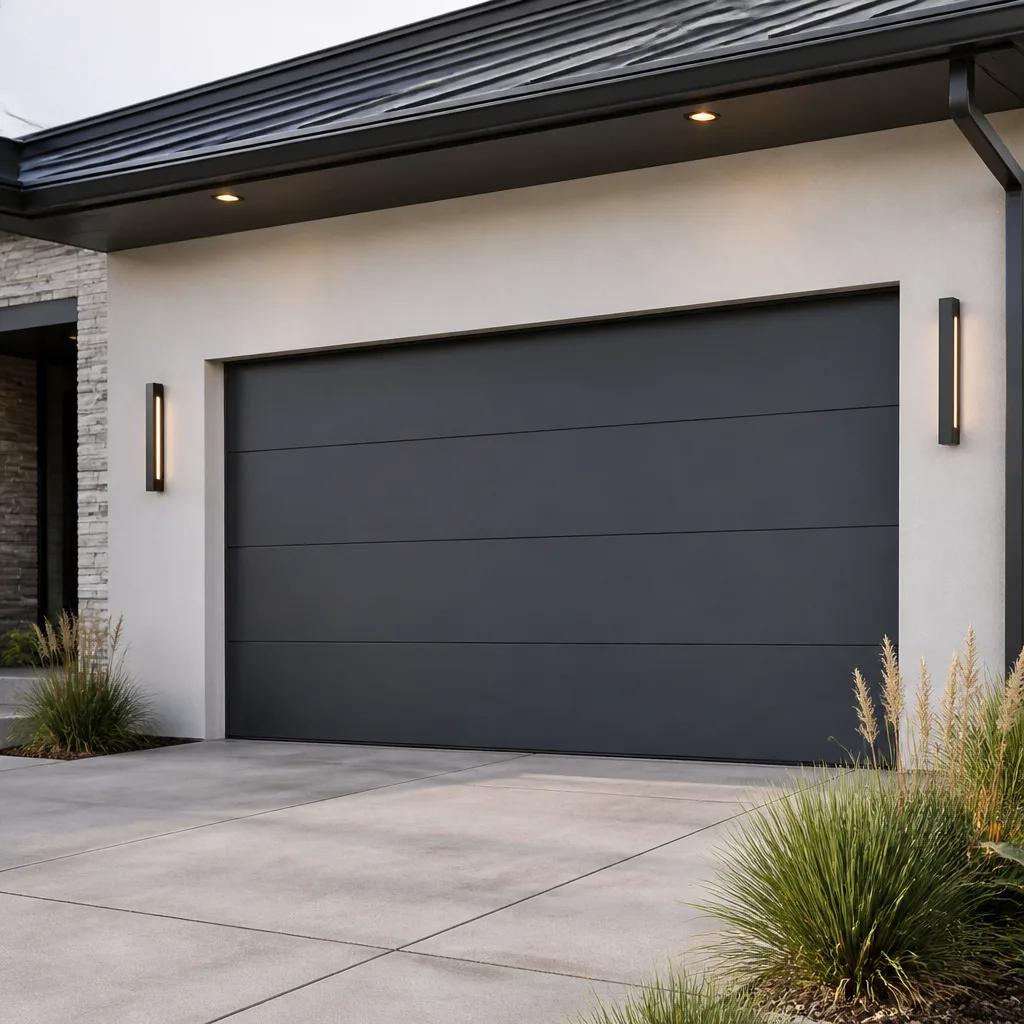 Modern flush
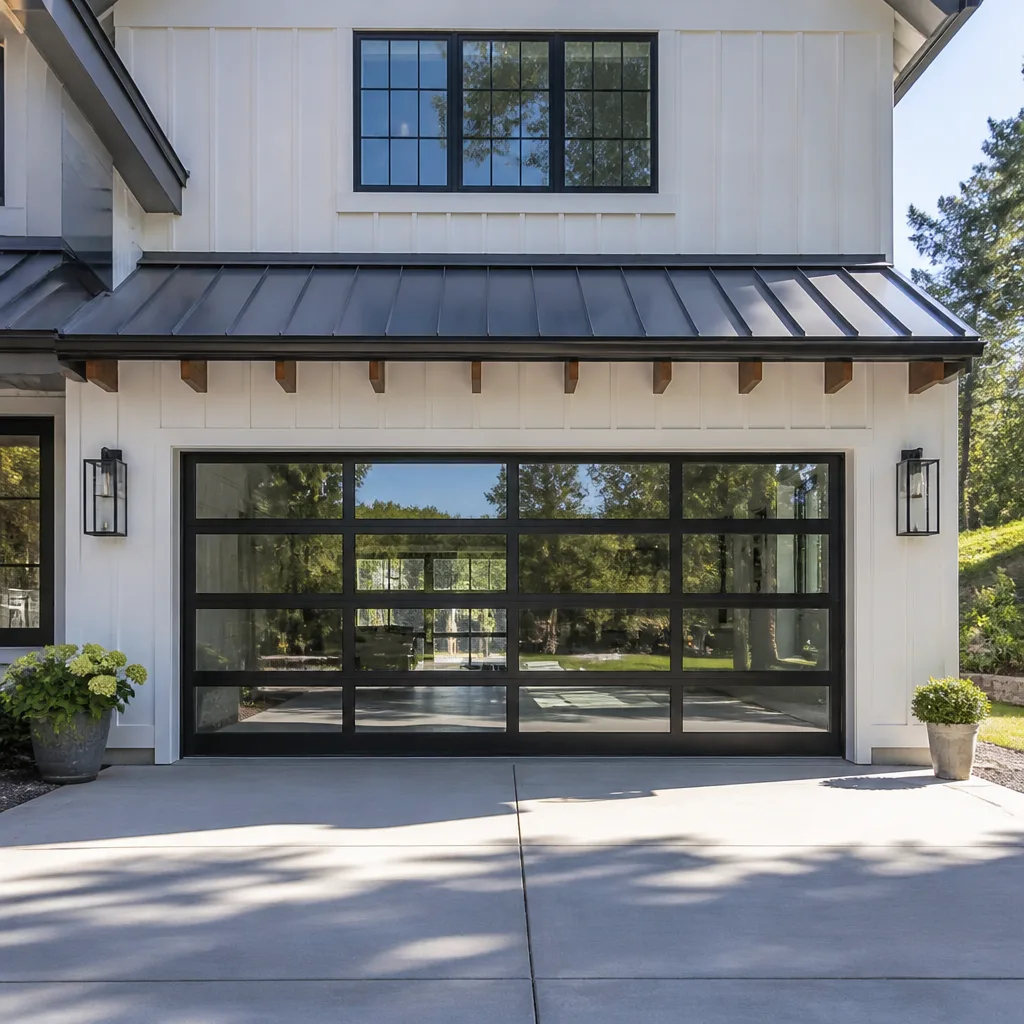 Full-view glass
 LiftMaster openers
 Chamberlain openers
Full 25-point door and opener safety check with every visit - springs, cables, rollers, tracks, and your LiftMaster or Chamberlain opener included
You get a price before we start. It does not change when the pro arrives.
Get your free estimateSeasonal Garage Door Care for Forest Hills: Year-Round Homeowner’s Guide
Most seasonal garage door advice treats the year as four identical checklist blocks, and that’s why it fails in Forest Hills. The threats here don’t rotate on a calendar. They stack. Road salt from a Queens winter wicks up into the cable drum and corrodes the set screws that hold tension, and that damage doesn’t announce itself in February. It shows up in April, when the door finally moves freely again and the drum lets go. Meanwhile the same freeze-thaw ground movement that racks the slab is working on your fasteners, and summer humidity is quietly softening wood panels and lifting bottom seals. This guide breaks the year down by what’s actually attacking which component in Forest Hills, so you fix the right thing at the right time instead of running a generic checklist that misses all of it.
Quick Answer
In Forest Hills, garage door care should follow the calendar of local stressors, not the calendar of seasons. Fall is for re-torquing fasteners and sealing against freeze-thaw movement, winter is for managing road salt intrusion and switching to cold-rated lubricant, spring is for inspecting what the cold months degraded (cables, drums, set screws, bottom seals), and summer is for wood panel and seal maintenance against humidity. The single most-missed item is the salt that travels past the bottom seal into the torsion hardware, where it works silently for months.
Styles & brands we work with
- Raised-panel steel
- Carriage house
- Modern flush
- Full-view glass
- LiftMaster openers
- Chamberlain openers
Table of Contents
- Why Forest Hills Ages Garage Doors Differently
- Fall Prep for Queens Freeze-Thaw Cycles
- How Road Salt Travels Through Your Garage Door System
- Cold-Weather Lubricant: Why White Lithium Fails Below 20°F
- Spring Post-Winter Inspection: What to Check First
- Summer Humidity and Wood Door Panels
- Brand-Specific Notes for Forest Hills Doors
- Common Mistakes to Avoid
Why Forest Hills Ages Garage Doors Differently
Forest Hills sits in a microclimate where three stressors overlap for much of the year: road salt in winter, repeated freeze-thaw cycles at the ground line, and humid summers. Each one attacks a different part of the system. Salt hits metal hardware, ground movement hits anchors and frame fasteners, and humidity hits wood and rubber. Because they overlap, damage from one masks damage from another. The corrosion on a torsion cable drum, for example, is winter salt at work, but you notice it as a spring problem because that’s when the door starts moving enough to expose it.
Our technicians have up to 8 years of experience working on Forest Hills doors, and the pattern is consistent. Homes on sloped driveways in the Gardens and along the streets near Austin Street get more water running toward the door during thaws. Doors facing north hold moisture longer on their panels. Single-car garages attached to older brick homes tend to have tighter tolerances at the bottom seal, which means salt and grit have less room to escape and more time to sit against hardware.
Understanding this overlap matters because it changes what “seasonal care” means. You’re not doing the same four tasks in rotation. You’re targeting three separate systems on three separate schedules.
Fall Prep for Queens Freeze-Thaw Cycles
Freeze-thaw is the dominant fall and early-winter stressor in Forest Hills because the ground moves. Water gets into small gaps, freezes, expands, thaws, and repeats. Each cycle pushes a little more movement into anything anchored to that ground or frame. Fall prep is about locking down what that movement will try to loosen.
- Re-torque the frame and hinge fasteners. Check every lag bolt holding the track brackets to the jamb and every hinge screw on the panels. Snug them by hand, not with a driver on full torque, since over-tightening can strip the wood jamb.
- Inspect the bottom seal and its retainer. Look for cracks, gaps at the corners, and any place where water can pool against the seal during a thaw. A worn seal is the entry point for everything that follows in winter.
- Check the track alignment at the floor. Freeze-thaw movement can push the concrete slab up slightly, which throws off the gap between the bottom of the door and the floor. If the door is resting unevenly, the seal wears faster on one side.
- Clear the drainage path on the driveway. Water pooling against the door in fall becomes ice against the door in winter and salt against the hardware all season.
- Lubricate hinge pivots and rollers with a cold-rated product (more on this in the lubricant section). Fall is the right time because the lubricant you apply now has to survive the lowest temperatures of the year.
- Test the balance of the door by hand. Disconnect the opener and lift the door halfway. It should stay put. If it drifts, the springs may be losing tension, and that’s a job for a professional given the risk involved.
Tree cover matters here too. Forest Hills has mature street trees, and leaf debris collecting behind the door in fall holds moisture against the bottom seal through the thaw cycles. A quick sweep after the leaves drop saves seal wear later.
How Road Salt Travels Through Your Garage Door System
Road salt doesn’t stop at the bottom weatherstripping. It gets past it as a brine, wicks upward along the cables and into the cable drum, and corrodes the set screws that hold the drum to the torsion bar under tension. By the time you see rust on the seal, the damage has already traveled to the highest-stress hardware on the door. That’s why the salt problem in Forest Hills shows up in spring, not winter, when the door finally starts cycling freely and the corrosion meets real load.
Winter driving brings salt into the garage on tires, and it settles as a fine crust on the floor and low panels. Every time the door cycles, some of that salt dust works its way into the same places. The path runs:
- Bottom weatherstripping – absorbs brine, cracks in the cold, loses its seal
- Bottom bracket and cable attachment points – the lowest metal on the door, first to corrode
- Cables – salt wicks up the strands and corrodes from the inside out
- Torsion cable drum and set screws – the highest-stress point, where corrosion most affects safety
- Torsion bar and bearing plates – slower degradation, but the cumulative effect over multiple winters is real
In our experience, the practical defense is to rinse the low hardware after the worst of the winter salt is over and to inspect the cable drum area specifically for rust-colored staining or a white crust around the set screws. If you see either, get the door checked by a professional before cycling it repeatedly. These are high-tension components and the safety risk of operating a door with compromised springs or cables is genuine.
Cold-Weather Lubricant: Why White Lithium Fails Below 20°F
Standard white lithium grease is the most common garage door lubricant on the shelf, and it’s the wrong choice for a Forest Hills winter. Below roughly 20°F it thickens and stops flowing where you need it, which leaves hinge pivots, rollers, and the torsion bearing plates working metal-on-metal during exactly the coldest months. The hinge pins don’t get the film they need, rollers drag, and the opener motor strains against the extra resistance.
What works better in a cold climate:
- Cold-rated synthetic grease for hinge pivots and bearing plates – look for a product rated to stay fluid well below zero
- PTFE or silicone-based spray for rollers, tracks, and the opener rail – silicone won’t attract grit the way grease does on an outdoor track
- No lubricant at all on torsion springs – the spring steel doesn’t need it, and adding grease just collects dirt
- Nothing on the cables – any added product traps dirt against the strands
Chamberlain and Genie opener rails respond well to a light silicone film, which reduces friction noise at low temperature without gumming up the trolley. Clopay polyurethane panels and Amarr steel panels both handle cold cycles without needing lubrication on the surface, but the hinge and roller hardware does.
The general rule: whatever you apply in fall has to survive the coldest night of the year in Forest Hills. If a product’s label says “all temperatures” without a number, assume it doesn’t.
Spring Post-Winter Inspection: What to Check First
Spring inspection in Forest Hills isn’t a cosmetic walkthrough. It’s the point where you find out what the cold months degraded. The tolerance is low because you’re looking at the same hardware that ran through salt, freeze-thaw movement, and cold-temperature friction.
- Cable drums and set screws. Look for a white crust or rust-color staining around the drum. Either means salt has reached it and the set screws may no longer be holding properly under tension. Don’t try to tighten them yourself; this is the highest-tension point in the system.
- Springs. Torsion springs and extension springs both show fatigue before failure: uneven lifting, a door that opens slowly, or a door that stops partway. Torsion spring work carries serious injury risk and should be left to a trained professional.
- Cables. Look for fraying, flattened areas, or dark spots on the strands. Any visible cable damage means the door shouldn’t be operated until it’s inspected.
- Bottom seal. Check the entire length for cracking and any gap where the door meets the floor. A worn seal in spring predicts salt and water entry all winter.
- Balance test. Disconnect the opener and test the door by hand at halfway. Drift in either direction indicates spring tension loss.
- Opener performance. Listen for hesitation, grinding, or a motor that strains on the first lift. Any of these on a brand-name opener (LiftMaster, Chamberlain, Genie, Craftsman) points to resistance somewhere in the door or rail that needs diagnosing.
If a door needs repair after a winter inspection, we handle garage door repair for exactly this kind of post-season damage. If the opener itself is hesitating or the motor is straining, garage door opener repair covers the electrical and mechanical side.
Summer Humidity and Wood Door Panels
Forest Hills summers bring a semi-urban heat profile: high humidity held in by the density of buildings and mature tree cover, with limited overnight drying. That cycle is hardest on wood doors. Wood absorbs moisture and swells, then dries and shrinks, and each cycle works the joints and paint film. Bottom seal adhesion is also stressed by summer humidity, since the adhesive backing holds against a substrate that’s moving under it.
What to do in summer:
- Inspect paint and stain on wood panels. Any breach is an entry point for moisture, and moisture behind a paint film is worse than no paint at all.
- Re-caulk joints where panel meets stile. A flexible exterior-grade caulk handles the swelling better than a rigid one.
- Check bottom seal adhesion at the corners. That’s where summer heat and humidity team up to lift the seal.
- Confirm the seal still sits flush to the floor. The same slab movement from winter can leave a small gap that shows up once the seal softens.
- Clean and dry the bottom hardware after any summer storms. Standing moisture on the bottom bracket is a summer issue for the same reason salt is a winter one.
If you’re replacing a door that’s reached the end of its life after multiple winters, garage door installation covers that option. Clopay and Amarr both make steel and insulated doors that suit the Forest Hills climate better than wood.
Brand-Specific Notes for Forest Hills Doors
Different brands show their cold-weather wear patterns differently, and knowing the brand saves diagnostic time. A Chamberlain opener with a belt drive handles low-temperature resistance differently than a chain-drive Genie, and the noises that suggest trouble aren’t the same. We work on LiftMaster, Chamberlain, Genie, Clopay, Amarr, Wayne Dalton, Craftsman, and Raynor systems specifically, which means we know where each one tends to fail in a cold, humid climate.
Some broad patterns:
- Chamberlain and LiftMaster openers – resistance from a stiff door often shows up as a brief hesitation at the start of the lift. That’s the opener limiting motor draw, not a fault in the opener itself.
- Genie openers – chain-drive models run louder at low temperature; listen for a change in the pattern, not the base noise level.
- Clopay panels – steel panels with insulated cores handle freeze-thaw well; the hinge hardware still needs fall re-torque like any other door.
- Amarr panels – similar cold tolerance, and the steel surface rarely needs more than a wash after winter salt exposure.
For a Forest Hills home with any of these brands, the seasonal care schedule above applies, but the failure mode to watch for during inspection is brand-specific. If you’re not sure what you have, the label inside the door panel or on the opener housing will tell you.
Common Mistakes to Avoid
- Running one seasonal checklist for all four seasons. The Forest Hills climate attacks three separate systems on three overlapping schedules, and a single checklist misses all three at once.
- Using white lithium grease through the winter. Below roughly 20°F it thickens and stops protecting the parts it’s on. Fall is when you switch to a cold-rated product, not January.
- Skipping the torsion hardware in spring inspection. The cable drum and set screws are the highest-stress point on the door, and the corrosion there is the salt damage from winter, not a spring issue.
- Tightening a cable drum or spring yourself. These components hold the full weight of the door under tension, and an improper adjustment can release that tension suddenly. This is not a homeowner task.
- Repainting a wood door without checking the wood underneath. Sealing moisture behind a fresh coat of paint traps it in the panel and accelerates the rot it was supposed to prevent.
- Ignoring bottom seal cracking through winter. The seal is the entry point for salt and water, and a cracked seal in December predicts hardware damage in April.
- Lubricating the spring itself. Torsion springs don’t need grease, and adding it collects grit that wears the spring faster.
See the difference
 Before
 After
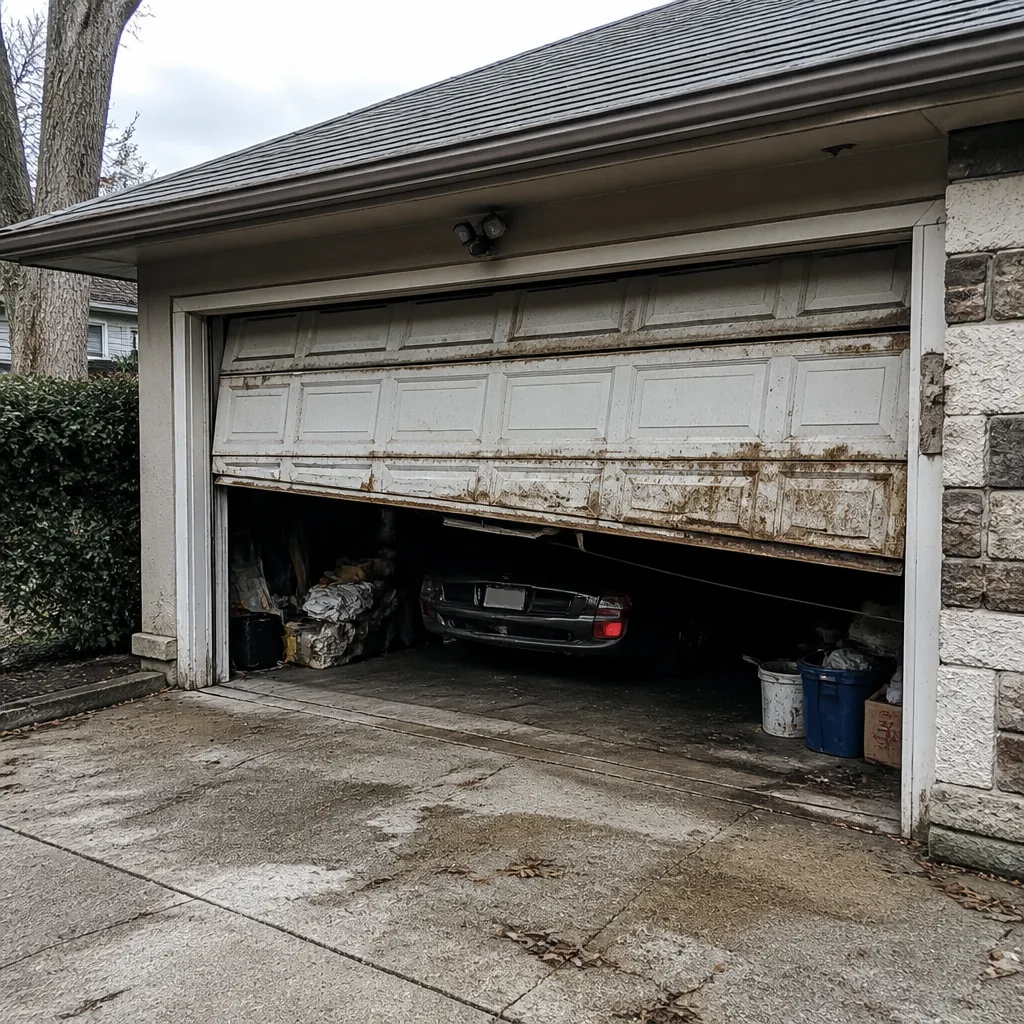 Before
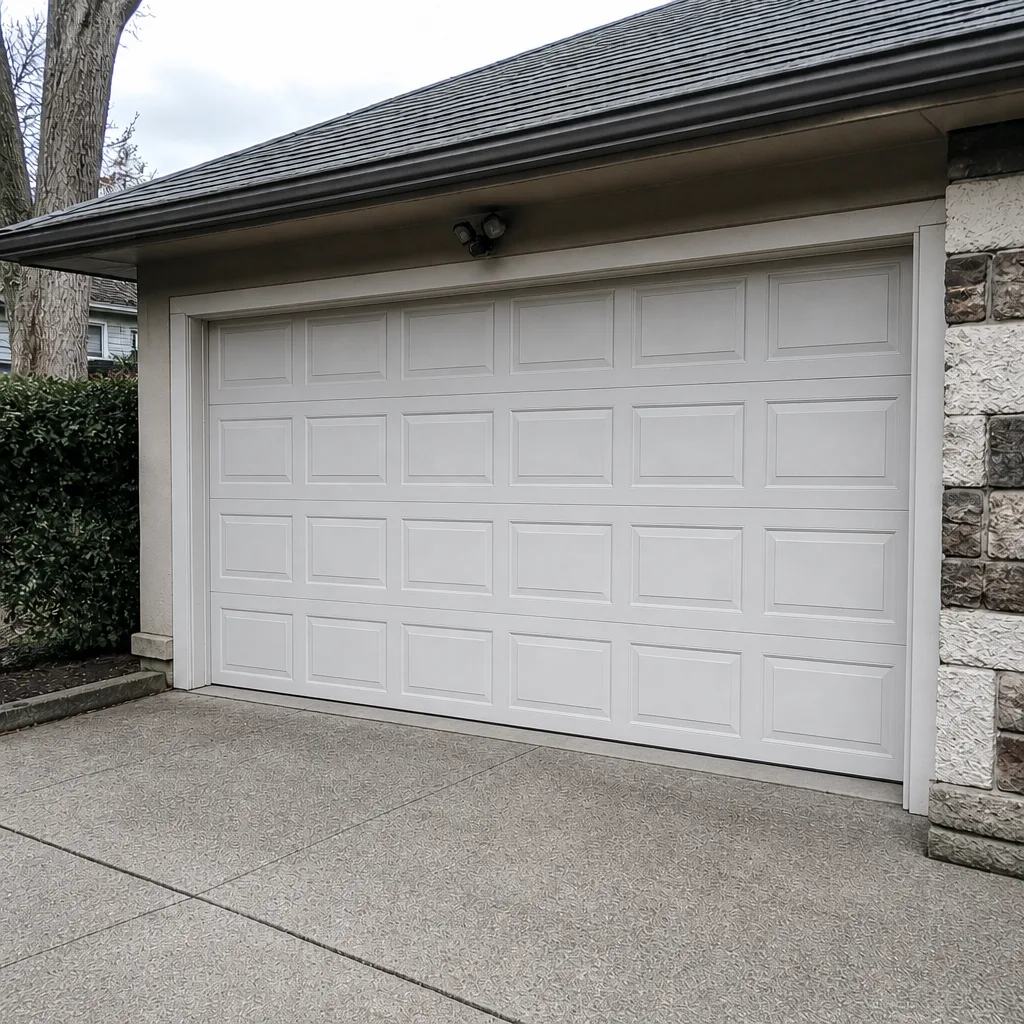 After
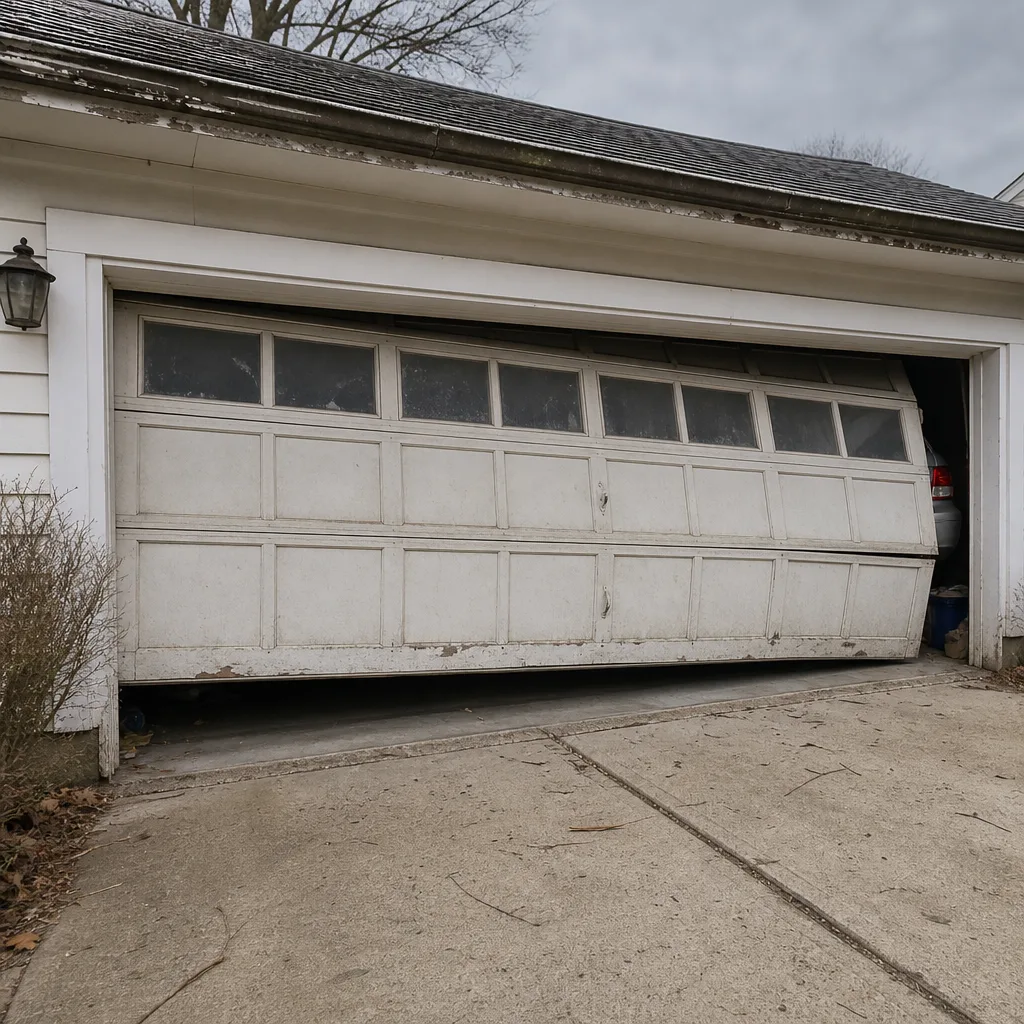 Before
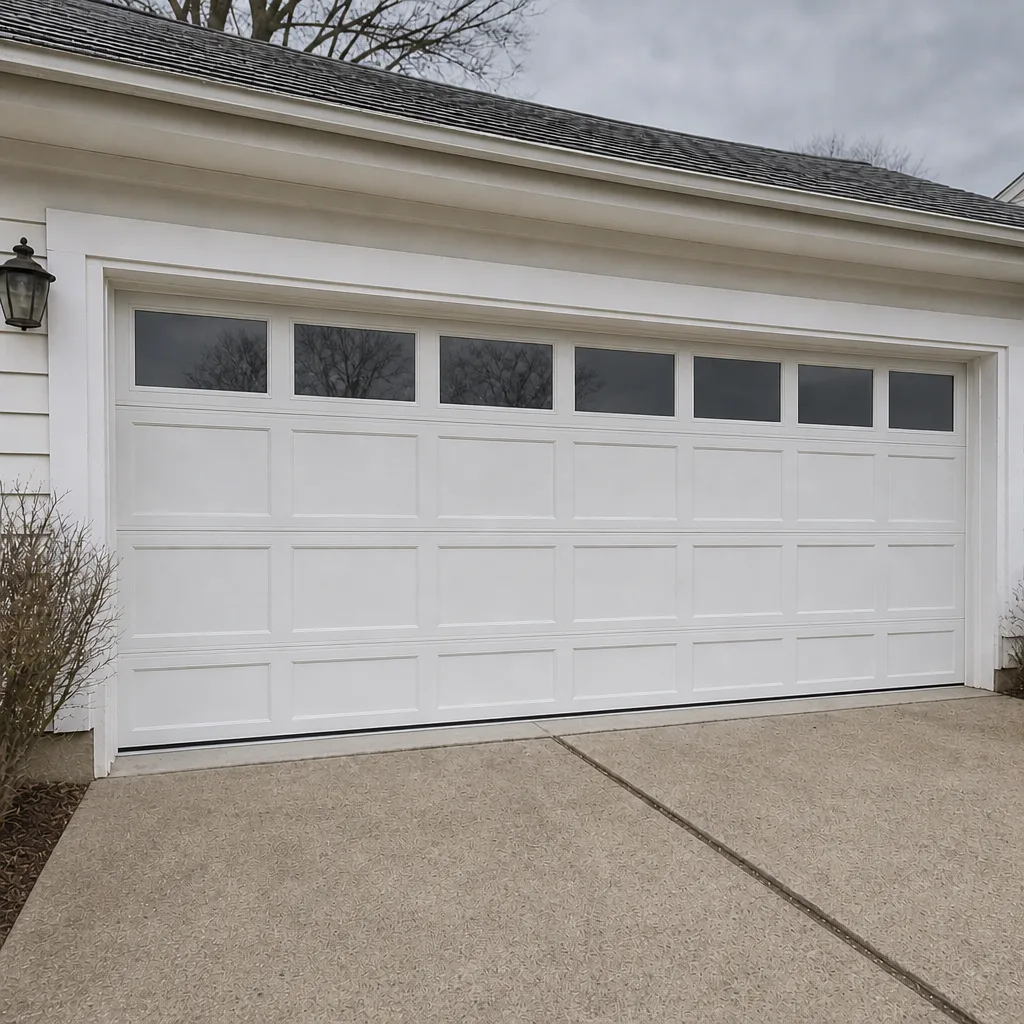 After
When to Call a Professional
Any work on torsion springs, cables, or the cable drum belongs to a trained professional because the tension in the system can cause serious injury if it releases unexpectedly. Same for an opener that has stopped lifting entirely, a door that has come off its track, or a door that shows visible cable fraying. These aren’t tasks to attempt with a ladder and a wrench. The Forest Hills Garage Door Repair Pros team handles spring repair, cable replacement, and opener diagnosis as a normal part of the work; springs, openers, panels – one call covers the whole system. If a door fails on an evening or Sunday, call. We answer 24/7. A call outside dispatch hours is booked into the next opening, Sunday through Friday, 7am to 7pm. Forest Hills Garage Door Repair Pros offers free estimates in Forest Hills, and the written estimate sets the final price before any work starts. Call (855) 658-4356.
Frequently Asked Questions
The best single time is late fall, before the first hard freeze, so fasteners are re-torqued and the hardware is lubricated with a cold-rated product before winter. The second most important time is early spring, to inspect what the winter degraded. If you only do one maintenance visit per year in Forest Hills, do it in fall. Call (855) 658-4356 to schedule a free estimate.
Cold thickens the lubricant on hinges and rollers and stiffens the seals, which adds resistance the opener has to overcome. If the door also has weakened springs or a partially corroded cable drum from salt exposure, the resistance is coming from those components, not the cold alone. Have the balance and hardware checked before assuming it’s just seasonal. Forest Hills Garage Door Repair Pros can diagnose the cause; call (855) 658-4356 for a free estimate.
Salt arrives on tires and settles as a fine dust and brine on the garage floor and low door hardware, and it wicks upward into the cable drum and set screws from there. The damage happens while the door is closed. In Forest Hills, the salt effect shows up most clearly in spring, when the door starts cycling freely and the corrosion meets the load it wasn’t visible under. Call (855) 658-4356 if you see rust-colored staining around the drum.
A cold-rated synthetic grease on hinge pivots and bearing plates, and a PTFE or silicone spray on rollers, tracks, and the opener rail. Standard white lithium grease thickens below roughly 20°F and stops protecting the parts it’s on. Don’t apply anything to the torsion springs or cables. For a professional service that covers the full system on LiftMaster, Chamberlain, Genie, Clopay, Amarr, Wayne Dalton, Craftsman, or Raynor equipment, call (855) 658-4356 for a free estimate.
Steel panels themselves handle humidity well; the components that suffer are the bottom seal adhesive and any wood door panels. Seal adhesion weakens when the substrate moves under it, and humidity is one of the things that moves it. If the corners of your seal are lifting in summer, that’s humidity at work, not a defective seal. Call (855) 658-4356 for a free estimate on seal replacement.
No. Torsion springs and cables hold the full weight of the door under tension, and the corrosion that salt causes makes the tension release less predictable, not more. A failed adjustment can cause serious injury. This is a job for a trained professional. Forest Hills Garage Door Repair Pros performs spring repair in-house as a core service. Call (855) 658-4356 for a free estimate.
The Bottom Line
Seasonal care in Forest Hills isn’t four identical checklists. It’s managing three stressors that overlap through much of the year: road salt traveling from the bottom seal up into the cable drum, freeze-thaw ground movement working on fasteners and seals, and summer humidity affecting wood panels and seal adhesion. Fall is for re-torquing and cold-rated lubrication, winter is for salt management and a lighter touch on the hardware, spring is for inspecting what the cold months degraded, and summer is for wood and seal care. The highest-risk work – springs and cables – belongs to a professional, and the earlier a problem is caught, the simpler it is to fix.
If anything in this guide matches something you’ve noticed on your own door, or if a door has stopped opening and you need a repair today, call Forest Hills Garage Door Repair Pros at (855) 658-4356. We answer 24/7. Fast dispatch from 7am to 7pm, Sunday through Friday. Free estimates, upfront pricing, and a written quote agreed before any work starts. For the city overview and full service list, see Forest Hills Garage Door Repair Pros.
Written by the team at Forest Hills Garage Door Repair Pros.